Resources Hub


Design to Source: 5 Themes from Manufacturing Insights 2026

Chris Jeznach
— October 6, 2026
Listen to this Article
1×
00:00
00:00
Key Takeaways:
- Teams that change designs, materials, and suppliers early can develop products fast and meet margin goals
- Engineers trust AI when they can check it, and its answers reflect how factories make parts
- Buyers who know what a part should cost to make can save more and keep supplier relationships intact
The Full Article:
On September 22-23, design, sourcing, and manufacturing leaders joined us in Chicago for Manufacturing Insights 2026. The theme was “From Design to Source: Measurable Impact at the Speed of AI.” Customers and our team spent two days exploring how manufacturers can develop products fast while also meeting margin goals. Five themes stood out.
1. Shift Left: Get Answers Before Changes Become Harder to Make
Early in product development, teams can still change geometry, materials, processes, and suppliers. Later, tooling, contracts, and launch dates limit those options. Our President and CEO, Stephanie Feraday, said, “A perfect analysis delivered after those commitments are made creates limited value.” Faster decisions can also shorten time to market.
One satellite internet company measured how late feedback lengthens lead times for design changes. Its manufacturing engineers saw designs only right before production release, when changes were too expensive to make. One repeat review added about half a day. Two added about four days, and four or more added about 18 days. Now designers who run a part through aPriori get early manufacturing feedback on their own, before any review.
Elevate Aircraft Seating requires every design engineer to submit parts through a web app, and aPriori checks each for cost and manufacturability. CNH analyzes cost when engineers check a design into its product lifecycle management (PLM) system, so they have that information earlier in the process.
2. Build Trust in AI with Manufacturing Data
Feraday said AI adoption stalls because of trust, not capability. An engineer who follows a recommendation owns the result, so they need an answer they can check. Only 9% of companies run a scaled engineering AI program, and 74% name data as a major barrier. Procurement leaders suggest that data, not the AI model, limits results.
CNH saw the problem with general-purpose LLMs. Its numbers for parts made in India were far from CNH’s own models, because LLMs don’t know how the company’s factories and suppliers make components.
Many AI sourcing tools also use market benchmarks and past pricing, the same data suppliers quote from. Our design-to-source intelligence starts from each customer’s own factory setup and gives the same result for the same inputs, so people can check the assumptions behind each estimate. It supports expert judgment instead of replacing it.
3. Give More People Access to Expert Knowledge
Across our customers, one cost engineer often supports about 100 designers and 50 commodity managers. With experts retiring and procurement workloads projected to grow by 8% in 2026, companies need to give more people access to expert knowledge.
At Elevate, an injection molding specialist is one of three designers supporting 30 to 90 engineers. He uses aPriori to learn sheet metal, and the designers he trains do the same. The satellite internet company still relies on a few experts, and the team is working to expand access to the software.
One of our consultants spent an hour with a customer using aPriori to review a supplier’s cost breakdown. The gap came down to a bigger press and one and a half operators, while the customer’s model assumed one operator for three machines. Now buyers can paste a supplier’s breakdown into aiSource, our AI sourcing and negotiation tool, and see the gaps themselves. Experts can step in when needed.
4. Negotiate with Facts and Treat Suppliers as Partners
CNH’s strategic sourcing program is moving from squeezing suppliers to working with them. Buyers look for outliers and leave fair quotes alone. For castings used in a combine’s feeder house, CNH used a should cost breakdown to compare its numbers with those from its Chinese suppliers. The team found slow machining times and design changes that would reduce capital spending. The result was about $440 less per unit, or about $1 million total, and the supplier relationship stayed intact.
Hackett Group research ranks supplier negotiation as procurement’s top source of savings. Asking for a flat percentage off isn’t much of a negotiation, and McKinsey finds that nearly half of expected savings never reach profits because buyers can’t defend their numbers. aiSource helps buyers compare quotes with should cost, prepare questions, respond with data, and report savings.
5. Automate, Connect Data, and Track Results
Automation matters because manual analysis only covers what someone has time to run. It can analyze every CAD model and update the results when the design changes. Automation also helps teams hit launch dates and cost targets together. It finds problems while fixes are still inexpensive, so teams don’t have to trade speed for margin.
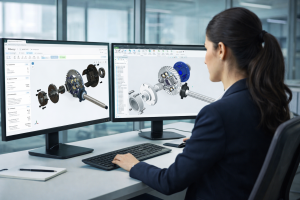
When an engineer checks a 3D CAD file into PLM, aPriori can analyze it automatically, return the results, and email the engineer a link to review cost and manufacturability in aP Design. Some customers pull volumes, prices, and regions from their Enterprise Resource Planning (ERP) system, and experts then adjust the first estimate.
Customers also compare aPriori’s estimates with actual spend to see where they pay more than the should cost. The Design Value Dashboard tracks the cost that design changes avoid. Design, sourcing, and manufacturing work on the same parts but often can’t see each other’s decisions. Shared cost data fixes that.
Lead the Change
Teams that make decisions earlier can move faster without giving up margin. Clear answers help engineers use the data, and automation keeps it up to date. Leaders help make it stick by setting expectations and asking teams to use the data.



Get the Session Replays and Presentations from Manufacturing Insights Chicago 2026
See how manufacturers transform performance from design to sourcing.Watch the Replays