
Resources Hub


Return to Glossary
Fact-Based Negotiations
Fact-Based Negotiations
Fact-based negotiations are guided by a data-driven methodology that uses objective should cost analysis, manufacturing intelligence, and market data to inform discussions between buyers and suppliers. Instead of relying on positional bargaining or assumptions, negotiations are grounded in verifiable facts about how a product is manufactured and what it should realistically cost to produce.
The goal of fact-based negotiation is to reach fair, economically justified agreements while fostering collaborative problem-solving and long-term supplier relationships.
Key Components of Fact-Based Negotiations
Fact-based negotiations comprise several key components. They include:
- Data Transparency
Negotiations rely on objective information such as material costs, labor rates, manufacturing processes, and industry benchmarks. - Should-Cost Modeling
A detailed estimate of what a product should cost to manufacture based on design specifications, materials, labor, overhead, and production processes. - Cost Driver Analysis
Identification of the primary factors that influence cost—such as material selection, machining time, or tooling—so negotiations focus on the most impactful areas. - Objective Criteria
Pricing discussions are evaluated against measurable standards such as cost models, market data, and engineering specifications. - Collaborative Problem Solving
Instead of simply pushing for lower prices, both parties explore improvements such as design changes, process optimization, or material alternatives.
The Fact-Based Negotiation Process
The fact-based negotiation process provides a structured, data-driven approach to align supplier pricing with underlying manufacturing costs and identify opportunities for mutually beneficial improvements. This process includes:
- Data Collection – Gather product specifications, supplier quotes, and market benchmarks.
- Cost Modeling – Develop a detailed cost estimate to understand manufacturing economics.
- Gap Analysis – Compare supplier pricing with expected costs to identify negotiation opportunities.
- Supplier Engagement – Use data insights to guide discussions around cost drivers.
- Solution Development – Explore design, process, or sourcing changes to reduce cost.
- Agreement – Establish a fair price and manufacturing approach based on shared facts.
The Role of aPriori In Fact-Based Negotiations
aPriori enhances fact-based negotiations by providing manufacturing intelligence and automated cost modeling. The platform analyzes product designs to estimate manufacturing costs—including materials, labor, machine time, and overhead—while identifying key cost drivers.
These insights allow procurement and engineering teams to:
- Understand the true cost structure of a part
- Identify cost reduction opportunities
- Enter negotiations with data-backed insights
- Focus discussions on specific manufacturing improvements
aPriori’s intelligence facilitates:
- More accurate pricing decisions
- Faster and more productive negotiations
- Stronger supplier collaboration
- Improved cost transparency
- Sustainable cost reductions
Fact-Based Negotiation transforms negotiations from subjective price discussions into data-driven collaboration, enabling organizations to achieve fair pricing and long-term value using objective manufacturing and cost insights—capabilities that are significantly strengthened through platforms like aPriori.
An Example of Manufacturing Procurement Conducting Fact-Based Negotiations
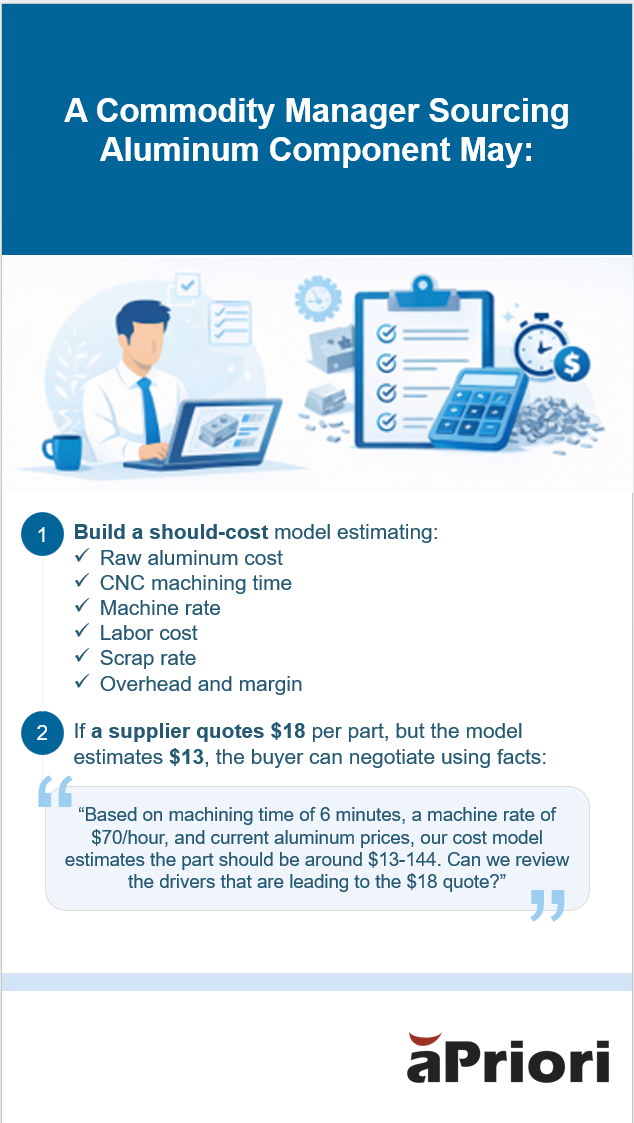
Having tools like Regional Data Libraries can facilitate this process faster and with more transparent data. This shifts the negotiation from positional bargaining to data-driven analysis.
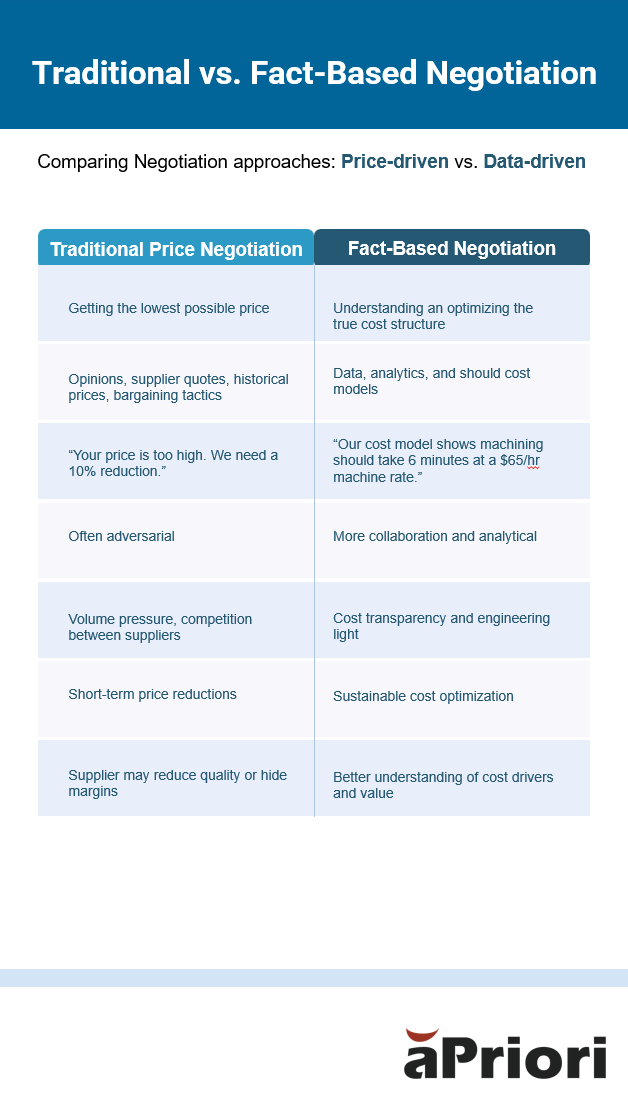
Here is a clear comparison between traditional price negotiation and fact-based negotiation, specifically for manufacturing sourcing and procurement professionals.
Data Is The New Currency When It Comes To Your Supply Chain
Learn how to build more agility into your supply chain, negotiate based on facts, and lower supplier costs in our report.
Access The Report

